EveryEvent Madrid

Browse All Events

Find every event in Madrid

events

Concerts & Live Music
Festivals
Sports & Recreation
Food & Drink
Arts & Culture
Community
Family & Kids
Nightlife
Comedy
Theater
Popular Destinations
BaliSedonaLos AngelesCosta RicaNew YorkSan FranciscoAustinMiamiJoshua TreeTulum
View All CategoriesView All Destinations

Explore All Features

Powerful tools to grow your events

Platform Features

Smart Dynamic Pricing
Ticket Categories
Assigned Seating
Abandoned Cart Recovery
Visitor Recovery
Donations & Sliding Scale
Affiliate Engine
Ticket Scanner
Coupon Codes
Custom Questions
Ticket Sharing
Upsells & Add-ons
Analytics & Reporting
Email Sequences
Waitlist / Notify / Remind
Explore
Discovery HubArtists & PerformersVenuesKnowledge Base
View All FeaturesAbout Us
PricingBlog
Language
Saved events
Browse All Events

events

Concerts & Live MusicFestivalsSports & RecreationFood & DrinkArts & CultureCommunityFamily & KidsNightlife

Popular Destinations

BaliSedonaLos AngelesCosta RicaNew YorkSan Francisco

Explore

Discovery HubArtists & PerformersVenuesKnowledge Base

Platform Features

Smart Dynamic PricingTicket CategoriesAssigned SeatingAbandoned Cart RecoveryVisitor RecoveryDonations & Sliding ScaleAffiliate EngineTicket ScannerCoupon CodesCustom QuestionsTicket SharingUpsells & Add-onsAnalytics & ReportingEmail SequencesWaitlist / Notify / Remind
View All FeaturesAbout Us
PricingBlog
Log inSign UpEvent Organizers
  • Browse All Events
  • Concerts & Live Music
  • Festivals
  • Sports & Recreation
  • Food & Drink
  • Arts & Culture
  • Community
  • Family & Kids
  • Nightlife
  • All Categories →
  • All Destinations →
  • For Promoters
  • For Artists
  • For Venues
  • For Festivals
  • For Event Spaces
  • For Nonprofits
  • For Bloggers
  • For Speakers
  • Brand Ambassador
  • Case Studies
  • 350K+ Buyer Network
  • Abandoned Cart Recovery
  • Smart Dynamic Pricing
  • Ticket Categories
  • Recurring Events
  • Assigned Seating
  • Affiliate Engine
  • Waitlist / Notify
  • Ticket Scanner
  • Embed Widget
  • Event Syndication
  • Message Center
  • Integrations
  • Reports
  • All Features →
  • About
  • The Ecosystem
  • Blog
  • Glossary
  • Inspiration
  • Help Center
  • Contact
  • API Docs
  • Brand Assets
  • Careers
  • Press
  • Terms of Service
  • Privacy Policy

Events

  • Browse All Events
  • Concerts & Live Music
  • Festivals
  • Sports & Recreation
  • Food & Drink
  • Arts & Culture
  • Community
  • Family & Kids
  • Nightlife
  • All Categories →

Getaways

  • All Destinations →

For Organizers

  • For Promoters
  • For Artists
  • For Venues
  • For Festivals
  • For Event Spaces
  • For Nonprofits
  • For Bloggers
  • For Speakers
  • Brand Ambassador
  • Case Studies

Features

  • 350K+ Buyer Network
  • Abandoned Cart Recovery
  • Smart Dynamic Pricing
  • Ticket Categories
  • Recurring Events
  • Assigned Seating
  • Affiliate Engine
  • Waitlist / Notify
  • Ticket Scanner
  • Embed Widget
  • Event Syndication
  • Message Center
  • Integrations
  • Reports
  • All Features →

Company

  • About
  • The Ecosystem
  • Blog
  • Glossary
  • Inspiration
  • Help Center
  • Contact
  • API Docs
  • Brand Assets
  • Careers
  • Press
  • Terms of Service
  • Privacy Policy
EveryEvent
© 2026 EveryEvent Madrid. All rights reserved.
Inspiration

Praying for Love: Healing Tearsand Fears Through Sacred Song

Donna De Lory
Donna De Lory
Aug 16, 2010
7 min read
Watch · 6
Donna De Lory's "Praying for Love" is a devotional composition that transforms personal grief—tears and fears—into a prayer for collective well-being. Through rhythmic repetition, drumming, and layered voices, the piece demonstrates how sacred music can serve as a container for emotional release while simultaneously lifting consciousness toward connection and care for others. The work functions both as a personal spiritual practice and as an invitation to listeners to participate in a shared intention for love and healing.

Read · 6 sections

What Does It Mean to Pray for Love?

At the heart of Donna De Lory's composition lies a paradoxical act: praying for love while simultaneously addressing pain. The opening invocation—"praying for love to take my tears"—frames prayer not as denial of suffering but as an alchemical process. Rather than suppressing or avoiding emotional experience, De Lory suggests that love itself has the capacity to metabolize, hold, and transform human grief. This is not metaphorical abstraction but a direct spiritual claim: that the act of prayer, sung with intention and presence, can change the internal landscape of the person praying and extend outward to affect those who receive the prayer.

The progression from "take my tears" to "take my fears" establishes a movement from surface emotion (tears, which are visible and immediately felt) to the deeper root of those tears—the underlying fear. In spiritual and psychological frameworks, fear often precedes tears; it is the substrate from which grief emerges. By naming both, De Lory honors the full spectrum of human vulnerability while maintaining that love—invoked through prayer—has the power to receive and transmute both.

How Does Repetition Deepen Prayer in Sacred Music?

The song's structure relies heavily on rhythmic and melodic repetition, a technique foundational to many contemplative and devotional traditions. Rather than advancing a narrative arc, the repetition of "praying for love" creates what might be called a sonic mantra—a repeated phrase that, like a mantra in Hindu or Buddhist practice, is designed to attune the nervous system and consciousness to a particular frequency or intention. Each return to the phrase allows the listener to drop deeper into its meaning rather than moving away from it.

This approach stands in contrast to much Western popular music, which typically moves forward through verse, chorus, and bridge structures that introduce new lyrical or melodic information. Here, the "new information" is internal: the same words, repeated and re-sung, reveal new depths of meaning with each iteration. For the person praying—whether De Lory singing or a listener joining in—the repetition functions as a vehicle for emotional and spiritual processing. The body, attuned to the rhythm and the drumming, moves into a state where thinking quiets and direct experience opens.

What Is the Role of Physical Sound and Rhythm in Healing?

De Lory's composition emphasizes the beating of the drums as a spiritual anchor. At the midpoint of the piece, the invocation shifts slightly: "take the time to hear the beating of the drums." This explicit invitation to witness the drums' rhythm suggests that the heartbeat itself—the most fundamental percussion of the human body—is being called into awareness and alignment. The drums, both metaphorically and literally, represent the body's own wisdom and presence.

In many indigenous and shamanic traditions, drumming serves as a vehicle for journey and healing. The steady, repetitive beat can slow or regulate brainwave states, creating conditions conducive to trance, vision, or deep emotional release. De Lory's reference to the drums, paired with the repetitive chanting, invokes this tradition without requiring the listener to have prior knowledge of it. The invitation is sensory and immediate: listen to the beat, let it anchor you, let your body feel its rhythm.

The mention of "the i'll voice right here"—rendered phonetically as the human voice itself, the instrument of the prayer—further grounds the practice in the body. It is not a distant, abstract prayer to a god in the sky but a voice present and alive, here and now. This locates spiritual practice in embodied presence rather than in a realm separate from the body.

How Does Personal Prayer Extend to Collective Healing?

The composition moves from singular to collective intention with the phrase "everybody needs a good night kiss it's the one great thing that we can't resist." The shift from "my tears," "my fears," and "let me pray for me" to "everybody needs" marks a widening of the prayer's scope. What begins as personal emotional release becomes an acknowledgment of universal human need: the need for comfort, tenderness, connection—symbolized by the simple image of a goodnight kiss.

This movement reflects a principle found in many contemplative traditions: that the cultivation of love or healing in one's own heart is inseparable from the extension of that love outward. As the Dalai Lama has stated in various forms, one's own suffering connects us to all beings who suffer. By naming both personal and universal need, De Lory avoids spiritual bypassing—the temptation to move directly to "universal love" without grounding it in actual human experience—while simultaneously expanding beyond individual isolation.

The phrase "the one great thing that we can't resist" suggests that this comfort, this love, is both utterly simple and profoundly necessary. It is not something to be earned or struggled toward; it is what humans are designed to receive and give. The song, by invoking it repeatedly, reminds the listener that this capacity for love and connection is always already present, waiting to be recognized and activated.

What Is the Spiritual Function of Acknowledging Limitation in Prayer?

Late in the composition, the lyrical content becomes sparse, even fragmentary: "if," "cause I'm," "let," "me pray," "for me." These incomplete phrases or single words suggest a breaking down of language itself, or a movement beyond language into pure sound and intention. The repeated "foreign," which appears near the end, could be interpreted multiple ways: as an acknowledgment that some dimensions of experience are unknowable or "foreign" to ordinary consciousness, or as a sound-word that has moved beyond linguistic meaning into pure vocalization.

This disintegration of clear meaning toward the end is significant. Rather than ending with a neat resolution or a complete statement, the prayer dissolves into fragmentation and breath. This reflects a mature spiritual understanding: that prayer is not always about clarity or perfect articulation. Sometimes prayer is the acknowledgment of what cannot be said, the acceptance of mystery and limitation, the surrender of the need to have it all figured out.

Where to Go From Here

If "Praying for Love" resonates with you, consider exploring Donna De Lory's broader body of work in sacred music and devotional song. Her compositions often weave together accessibility (simple, singable melodies and lyrics) with spiritual depth, making them useful both as personal practice and as shared community ritual. To deepen your own engagement with the piece, you might use it as a meditation or prayer practice, repeating it daily for a period of time and noticing how your nervous system and emotional state shift. You could also explore other traditions of devotional singing—kirtan, qigong sound healing, or Gregorian chant—to understand how repetitive vocalization and prayer function across cultures. Finally, consider the ways in which your own tears and fears might be held and transformed through the invocation of love, whether through singing, spoken prayer, or silent meditation.

]]>
Transcript

[0:02] praying for love

[0:05] to take my tears

[0:07] to take my fears

[0:21] praying for

[0:42] everybody needs a good night kiss it's

[0:46] the one great thing that we can't resist

[1:05] take me

[1:19] praying

[1:31] while the world is

[1:40] and take the time to hear the beating of

[1:43] the drums to hear the

[1:53] i'll voice right here

[2:13] if

[2:48] cause i'm

[3:04] let

[3:07] me pray

[3:22] for me

[3:39] oh

[3:57] foreign

[4:04] foreign

[4:17] foreign

Donna De Lory
AuthorDonna De Lory

A multi-talented vocalist and producer who rose to prominence as Madonna's longtime backup singer, now creating spiritually-infused world music that blends pop sensibility with dev…

View profileWebsite
Explore Topics
Devotional-musicPrayer-healingSacred-soundEmotional-releaseSpiritual-practice

Got Questions?

Frequently Asked Questions

Repetition in sacred music, like a mantra, attunes the nervous system to a particular intention. Rather than advancing a narrative, each return to the phrase allows deeper processing, quieting thinking and opening direct emotional and spiritual experience. The body's alignment with rhythm facilitates this healing at a level beyond intellectual understanding.
The drums represent the heartbeat—the body's most fundamental rhythm—and serve as an anchor to present-moment awareness. In many traditions, steady drumming regulates brainwave states and creates conditions for emotional release and spiritual journey, grounding practice in embodied presence rather than abstract belief.
Yes. The principle that appears across contemplative traditions is that love cultivated in one's own heart naturally extends outward. By naming both personal need (tears, fears) and universal need (everybody needs comfort), a prayer avoids spiritual bypassing while expanding beyond individual isolation.
The breakdown of clear language toward the end of prayer can reflect spiritual maturation: the acknowledgment that some dimensions of experience are unknowable and cannot be perfectly articulated. This acceptance of mystery and limitation is itself a form of surrender and deepening in prayer.
You can sing or listen to the piece regularly as a meditation or daily prayer practice, allowing the repetition and rhythm to attune your nervous system and emotional state. Over time, consistent engagement with the mantra-like qualities can shift your inner landscape and deepen your connection to its spiritual intention.
While the song draws on universal principles found across contemplative traditions—mantra, drumming, vocal prayer—it is presented as an accessible devotional practice rather than tied to a specific lineage, making it available to practitioners from many backgrounds.

Continue Reading

More from Donna

View All
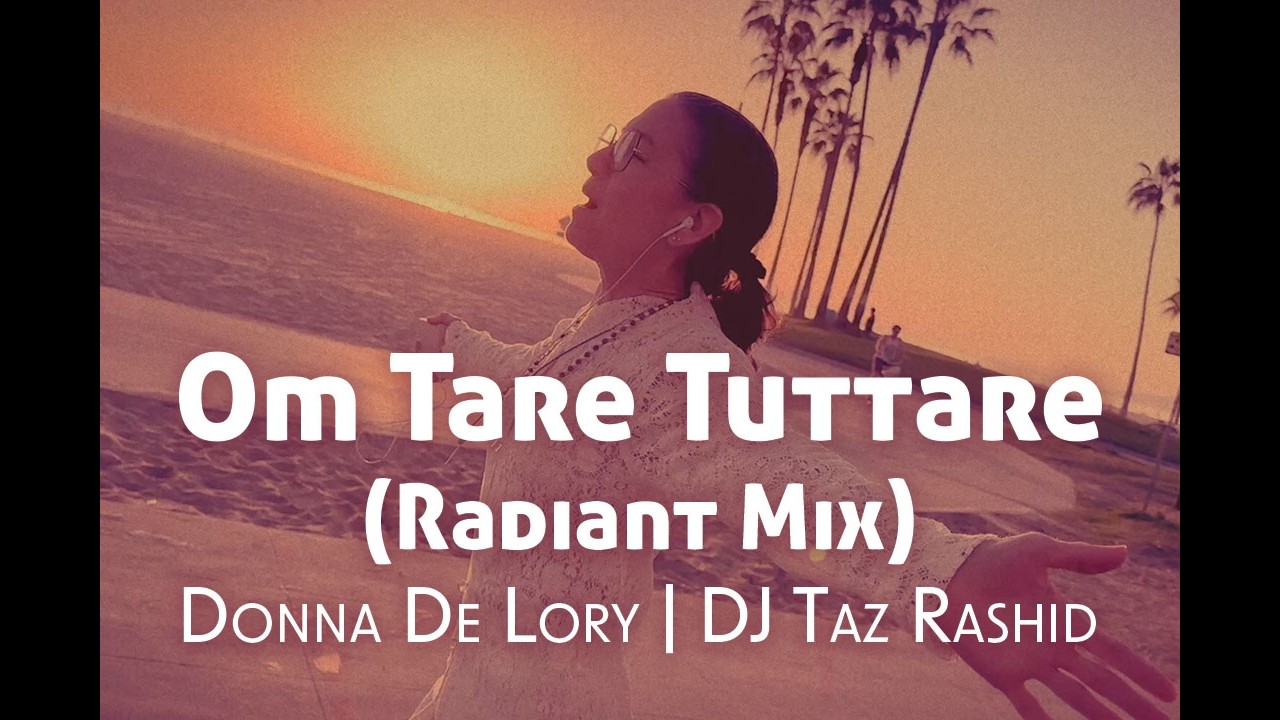
Om Tare Tuttare Mantra: DJ Taz Rashid's Radiant Remix
Featured

Om Tare Tuttare Mantra: DJ Taz Rashid's Radiant Remix

DJ Taz Rashid remixes the sacred "Om Tare Tuttare" mantra into a contemporary groove that centers spiritual practice within everyday urban l…

1 min read
Om Namah Shivaya & Thy Will Be Done: Sacred Mantra Meditation
Featured

Om Namah Shivaya & Thy Will Be Done: Sacred Mantra Meditation

A meditation mix blending the Sanskrit mantra Om Namah Shivaya with the Christian invocation Thy Will Be Done, featuring kirtan artist Donna…

1 min read
Prayer for Compassion: Avalokiteshvara Mantra in Times of Tragedy
Featured

Prayer for Compassion: Avalokiteshvara Mantra in Times of Tragedy

When disaster strikes across borders, spiritual practice becomes an act of collective healing. A meditation on mantra's role in witnessing a…

1 min read
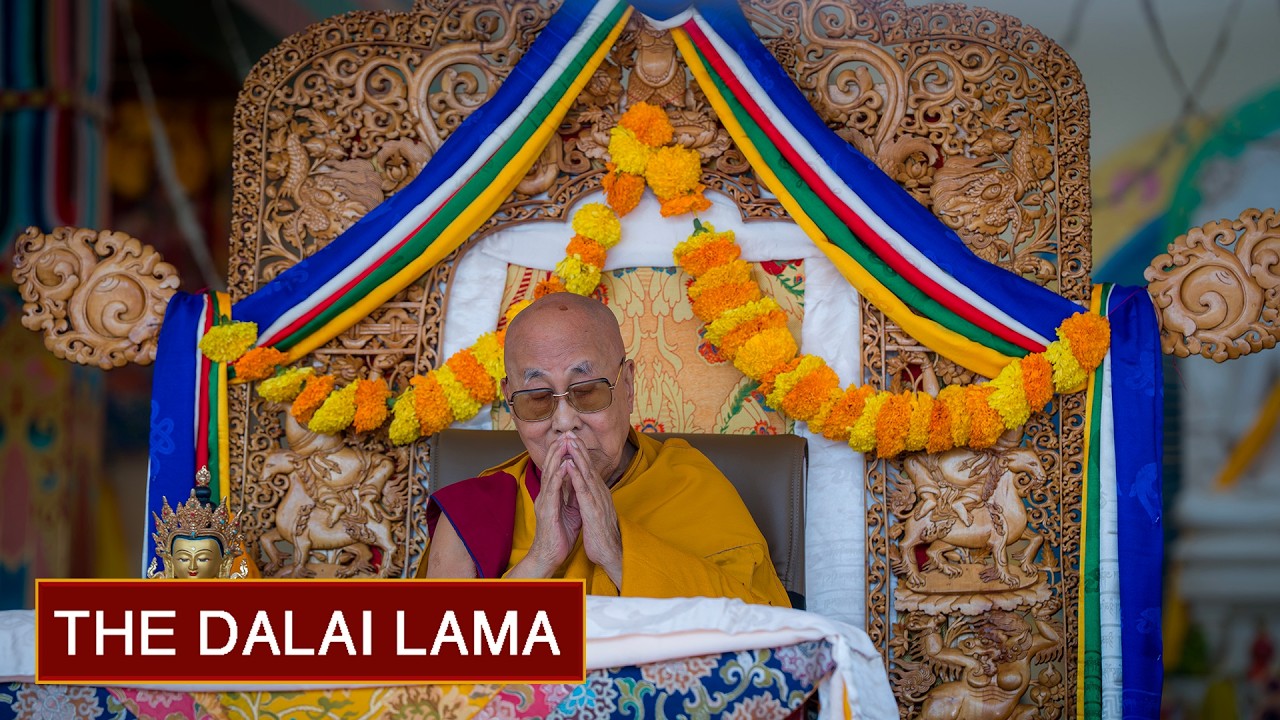
The Deep Bond Between Abdul Kalam and the Dalai Lama
Featured

The Deep Bond Between Abdul Kalam and the Dalai Lama

A rare encounter between two spiritual and intellectual giants reveals the profound mutual respect that transcended titles, achievements, an…

1 min read

Keep exploring

Continue your journey

More wisdom and gatherings from across the BrightStar directory.

More Articles

Browse the full library of teachings, interviews, and guides.

Back to all articles →

Teachers & Artists

Explore the lineages, musicians, and guides of the conscious world.

Explore artists →

Find an Event

Kirtan, retreats, sound baths, breathwork, festivals — happening soon.

Browse events →