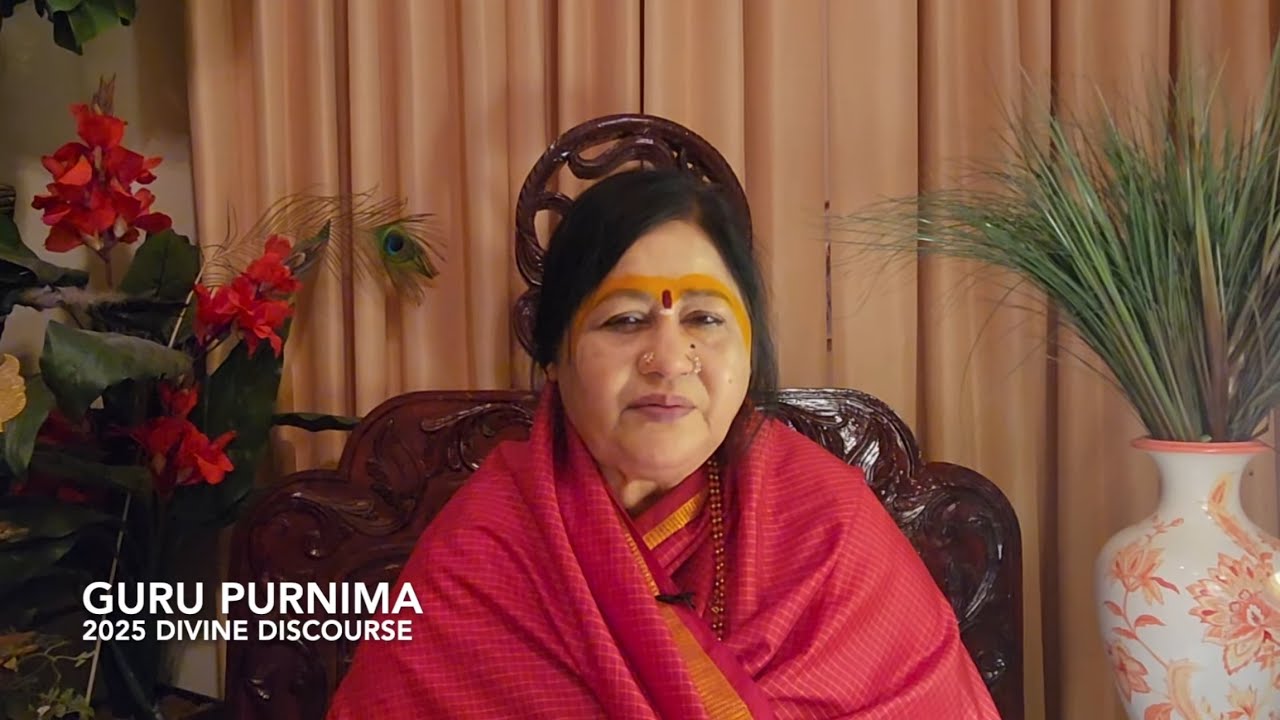
Sri Karunamayi presents a foundational introduction to the Sri Lalita Sahasranama, a classical Hindu devotional text containing one thousand divine names of the Goddess Lalita (also known as Lalita Ambika). The discourse explores why this sacred text is considered one of the most powerful practices in Hindu spirituality, describes the cosmological context from the Brahmanda Purana, and outlines the transformative benefits of chanting these divine names—including protection from obstacles, purification of karma, and spiritual advancement across lifetimes. Rather than treating the names as mere words, Karunamayi emphasizes that each of the thousand names carries hidden meanings, mantric power, and the direct presence of the Goddess herself.
What Makes the Lalita Sahasranama the Supreme Spiritual Practice?
Sri Karunamayi establishes that the Sri Lalita Sahasranama occupies a uniquely exalted position within Hindu sacred literature. While the divine appears in countless forms across the cosmos, each aspect of Godhead typically has associated names and mantras—but the Lalita Sahasranama stands as one of the most comprehensive and potent compilations. Karunamayi notes that this text does not merely list names; rather, each name is a direct invocation of the Goddess's specific qualities, powers, and manifestations.
The text originates from the Brahmanda Purana, one of the eighteen major Puranas of Hindu tradition. According to Karunamayi's explanation, the Brahmanda Purana devotes special attention to the glory and significance of the Sri Lalita Sahasranama in verses that celebrate its unparalleled benefits. The names themselves are not arbitrary—they encode the cosmological principles of creation, sustenance, and dissolution (srishti, sthiti, pralaya). When one chants these names with awareness, one is not simply reciting words; one is engaging with the very laws by which the universe operates and through which consciousness manifests.
How Are the 1000 Names Organized and What Do They Represent?
Karunamayi explains that the Lalita Sahasranama is structured as a dialogue (stotra or hymn) in which the divine names are revealed systematically. The text encompasses multiple layers of meaning: the obvious meaning of each name on the surface, the hidden meanings (gupta artha) that require spiritual insight to understand, and the mantric secrets (mantra rahasyam) embedded within the phonetic vibrations of the names themselves.
The thousand names collectively represent the totality of the Goddess in her role as:
- Creator (Brahmi aspect): The generative, expansive principle of the universe
- Sustainer (Vishnu aspect): The maintaining, nurturing, and preserving power
- Destroyer (Shiva aspect): The dissolving, transformative, and liberating force
These three cosmic functions—creation, maintenance, and dissolution—are not separate from the Goddess; they are her eternal play (lila). By chanting her thousand names, the practitioner attunes themselves to these cosmic principles and invokes the Goddess's direct blessing and intervention in these domains of existence.
What Are the Spiritual and Worldly Benefits of Chanting the Sahasranama?
Karunamayi describes multiple levels of benefit that accrue to those who engage with the Sri Lalita Sahasranama. These benefits extend across spiritual, mental, emotional, and material dimensions of life:
- Protection and removal of obstacles: The chanting of divine names is a shield against negative forces, malevolent intentions, and karmic obstacles. Karunamayi emphasizes that the very act of invoking the Goddess through her thousand names brings her protective presence into one's life and environment.
- Purification of karma and past deeds: Each name carries purifying power that cleanses accumulated karma. According to Karunamayi, the Brahmanda Purana specifically states that chanting the Sahasranama can neutralize even grave transgressions and karmic debts accumulated over multiple lifetimes.
- Fulfillment of desires aligned with dharma: The Goddess, when invoked through her divine names, grants blessings to those who seek material and worldly prosperity in harmony with dharma (righteousness). Karunamayi notes that the names include aspects of the Goddess as Lakshmi (prosperity), Saraswati (wisdom), and Durga (protection), among many others.
- Liberation and spiritual advancement: Ultimately, the highest fruit of the practice is liberation (moksha) or steady spiritual progression toward the divine. Karunamayi teaches that the names lead the sincere practitioner beyond the cycle of birth and death toward merger with the supreme consciousness.
Importantly, Karunamayi stresses that these benefits do not arise from mere mechanical repetition. The efficacy of the practice depends on the devotee's intention, devotion, faith, and awareness of what the names represent. When one chants with genuine surrender and understanding, the Goddess's grace flows forth abundantly.
Why Is This Text Called "Sahasranama" and What Does the Number 1000 Signify?
The term "Sahasranama" literally means "thousand names" (sahasra = thousand; nama = name). Karunamayi explains that while the Goddess is infinite and transcends enumeration, the thousand names represent the most essential, comprehensive, and efficacious of her divine appellations. The number one thousand itself is significant in Hindu cosmology and numerology—it represents wholeness, completeness, and abundance.
Moreover, the Goddess is sometimes understood as residing in the Sri Chakra (the sacred geometric diagram central to Shri Vidya practice), which contains multiple levels and triangles. Each name can be mapped onto this sacred geometry, creating a multidimensional invocation that aligns the practitioner's consciousness with the cosmic order enshrined within the chakra.
How Should One Approach the Practice of Chanting the Sahasranama?
Karunamayi addresses the question of proper practice with both inclusivity and reverence. She teaches that the Sahasranama is accessible to all—regardless of age, gender, caste, or status—because the Goddess's grace is universal. Anyone who approaches the practice with sincerity and devotion can receive its benefits.
The practice may take various forms:
- Formal chanting (parayana): Reading or reciting the entire text in sequence, which typically takes several hours to complete
- Meditation on individual names: Selecting one or more names and contemplating their meanings deeply
- Japa (repetitive chanting): Focusing on a particular name or set of names with a mala (prayer beads) for a set number of repetitions
- Listening and reflection: Hearing the names chanted by others and reflecting on their significance
Karunamayi emphasizes that the practice is not about rigid technique but about opening one's heart to the Goddess. Even if one does not understand Sanskrit or the literal meaning of every name, the vibrational quality of the names themselves carries power. The Goddess responds to genuine devotion and sincerity.
What Is the Cosmic and Scriptural Context of the Sahasranama?
Karunamayi grounds the Sahasranama within the broader framework of Hindu cosmology and scripture. The text emerges from the Brahmanda Purana, which contains accounts of the cosmic cycles (yugas), the manifestation of the divine in various forms, and the role of Shakti (cosmic energy) as the animating principle underlying all existence. The Purana emphasizes that Shakti—in her form as Lalita—is not subordinate to other deities but is the very ground of their being.
Within this context, the Sahasranama is presented as a supreme tool for both worldly welfare (abhyudaya) and spiritual liberation (moksha). It is described as a wish-fulfilling tree (kalpa vriksha) that yields whatever spiritual or material fruits the sincere practitioner seeks. The practice of honoring the thousand names is thus presented not as an exotic or esoteric ritual, but as a fundamental act of alignment with the deepest principles of the cosmos.
Where to Go From Here
For those drawn to deepen their engagement with the Sri Lalita Sahasranama, Karunamayi's discourse provides essential foundational knowledge. The next steps might include: obtaining a reliable text or recording of the Sahasranama in Sanskrit with translation; learning about the Sri Chakra and its relationship to the divine names; exploring the philosophical basis of Shakta (goddess-centered) spirituality; and beginning a personal practice of chanting or meditating on the names with consistency and devotion. Karunamayi's own teachings and recordings can serve as guides for proper pronunciation and understanding of the deeper meanings hidden within each of the thousand divine names.